Archive for the ‘Research’ Category
From Open Data to Open Action
“The thing to remember is, Human beings do not socialize in a completely random way. There’s a tangible reason for us being together, that ties us together. Again, that reason is called the Social Object.” Hugh MacLeod
The Open Government Partnership declaration commits members to support civic participation in addition to making data on government activities open to the public. In Africa, Kenya made history as the first country in sub-Sahara Africa to implement an open data initiative giving citizens unprecedented access to valuable datasets. 40 countries, 5 of them African countries, have since signed up to the OGP and I believe they are at different levels of following through on the spirit of the declaration.
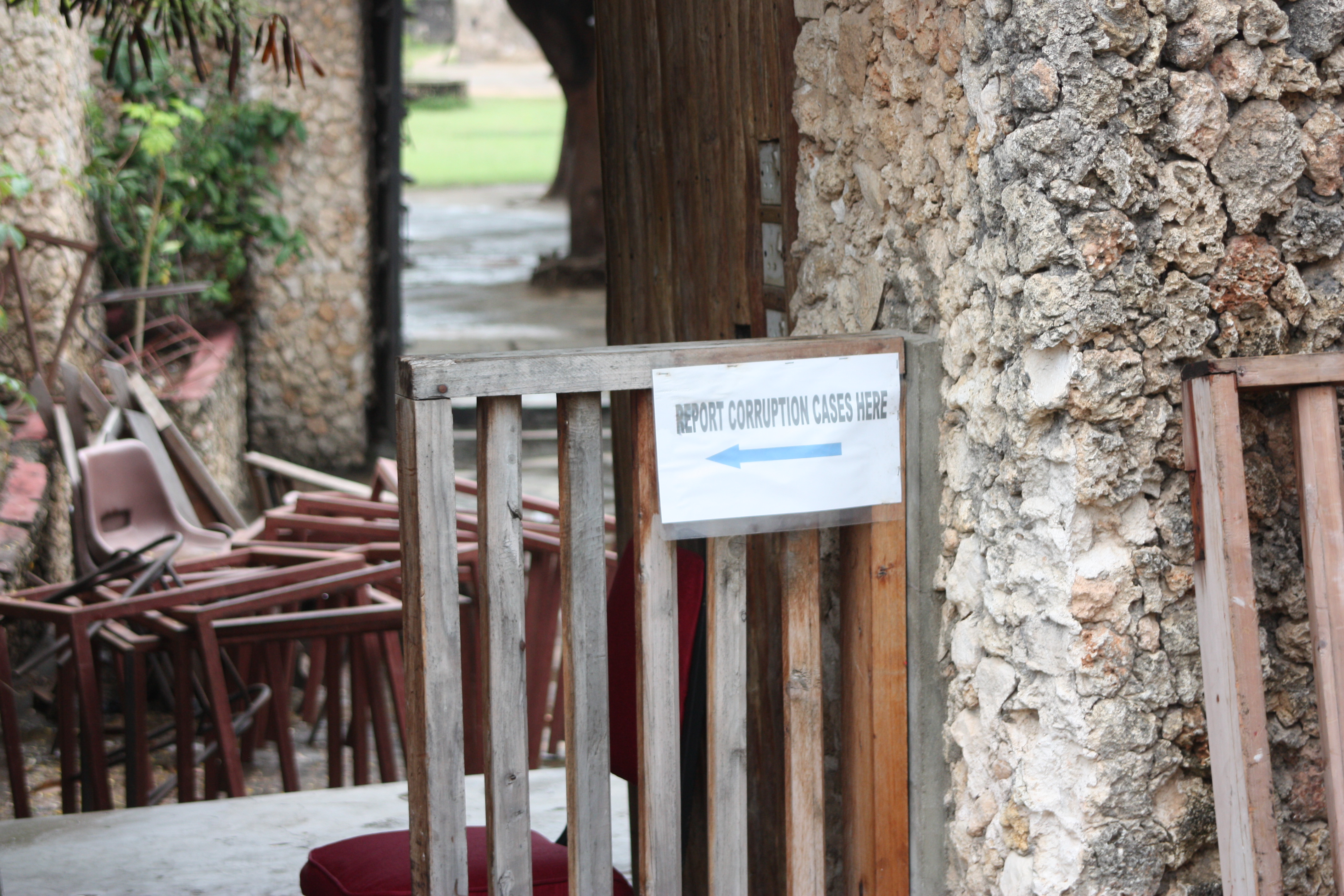
The value of open data to citizens is unquestionable. This year, Kenyan software developers have launched mobile apps that leverage open data to provide services to citizens. They have mostly been in the healthcare and agriculture verticals but services in education and entertainment have begun to emerge. These are very encouraging signals coming out of a country that only a decade or two ago made it almost impossible for citizens to know what the government was doing. These apps may not have been possible without access to the huge amount of data the government holds and is now making available to software developers.
However, we shouldn’t think of only mobile and the web when we talk about leveraging open data. “To turn raw data into ‘edible’ content that citizens can consume and make decisions with” should be the overarching objective for anyone looking to improve citizen participation in governance through open data. This edible bits of content should be easily consumed on the now ubiquitous mobile devices in Africa as well as on old fashioned news print and billboards. Jyri Engestrom refers to social networks as “object-centered sociality” meaning people connect because they have a reason to and that reason is usually an object (in the loose sense of the word). Moving from mere intentions to action may start with little more than an object (physical or otherwise).
We arrive in Shanghai
with the PowerKiss table.
The team that took off from Helsinki on the evening of the 20th arrived early morning of the 21st of May and went directly to the Aalto Tongji Design Factory premises in Shanghai. Naturally, the first thing to be the built was the sauna on the roof – construction started in earnest that very morning…
Meanwhile downstairs, the Design Factory’s shiny floors showcased the look and feel of Finnish wood and Marimekko prints so beautifully.
K, that’s the brochure done :p Regular programming will resume tomorrow
A Wisdom Manifesto – Re:interpreted and Re:framed
I went back to look at Umair Haque’s Wisdom Manifesto I’d linked to last week, as I’d been mulling over things such as values, meaning and understanding after my post yesterday. In context of the values we espouse here at the Design Factory, it struck me that there may be seeds of an entire foundation for solution development, a platform in fact, if you will. But since those thoughts are still fuzzy and as yet unformed, I thought I’d begin by pulling apart Haque’s masterpiece and applying the creative license to re-interpret it with respect to the challenge of addressing the “unknown” or the “emerging future”, or even, “innovation”. (Or rather, banana…)
Haque begins his manifesto with the following introduction, partially expressed here:
There’s a simpler way to express institutional capital. It’s about wisdom. It is because we’ve beggared ourselves of wisdom that we’re bereft of cash, jobs, and meaning.
The scarcest, rarest, and most valuable resource in the world today is wisdom. The countries, companies, and people that possess it will prosper. In many ways, wisdom is the opposite of strategy — and today, it is strategy, bought by the dozen from legions of besuited, back-slapping consultants, that is cheap, abundant, and worth little.
How large is the economic gap between wisdom and strategy? It begins in the billions. JPMorgan wasn’t wise, and now it has to set aside $3 billion in “model-uncertainty reserves.” Toyota wasn’t wise — and the price of that lack of wisdom is already $10 billion and rising.
Think wisdom’s warm-and-fuzzy? Think again. It’s as hard-as-nails, and as sharp as a razor.
And while his writing continues on to elaborate 9 key points, it is from these that I will now extract sentences to re-frame and reinterpret as I attempt to crystallize my thoughts on my key takeaways from his writing:
Value
Wisdom isn’t about what you “value” — it’s about how everyone values you. To get wise, articulate your essence
Understanding
Wisdom happens by understanding the who, why, what, and how of suffering. That’s the only source of the most explosive kind of horsepower — not just physical or intellectual energy, but emotional and ethical energy.
High Standards
Wisdom is measured against a higher standard than mere strategy: the one set by what people, communities, and society lack.
Curiosity (thank you Wycliffe for the perfect word found in the kitchen)
Wisdom requires space for experimentation and play — for people to find new ways to change the world.
Love
Strategy is the application of force. Wisdom is the application of love. Strategy suppresses, but Wisdom evokes. Its test is the ability to spark new ideas, concepts, and solutions. That is how to be valued by people, communities, and society
Uncompromising vision
Wisdom’s battle is the real one: never to compromise your essence, the way you want to change the world.
Ennoble (to elevate in degree, excellence, or respect; dignify; exalt)
Wisdom is about what’s higher. Can you hold yourself up to a higher standard than the bare minimum rule-makers ask for (profit, here and now) — and by doing so, create more value?
Eternal
Wisdom is eternal. And that means that it’s a ceaseless quest for learning.
Now I can see here the seeds of a path towards wisdom, embodied and embedded in new ways of thinking and making and doing. We now have the following 8 conceptual keywords:
Value - Understanding - High Standards - Curiosity - Love - Uncompromising vision - Ennoble and Eternal.
Design Globalization – A conversation in four parts (December 2006)

Niti Bhan
New Markets Strategist
Author, Numerous

Dirk Knemeyer
Principal, Involution Studios
Author, Numerous

Joseph O’Sullivan
Senior Design Director, Design Methods, Yahoo! Inc.

Luke Wroblewski
Principal Designer, Social Media, Yahoo! Inc.
Founder/Principal, LukeW Interface Designs
Author, Site-Seeing: A Visual Approach to Web Usability
A conversation in four parts:
Design Globalization: Part 1
Design Globalization: Part 2
Design Globalization: Part 3
Update 12/22/06 – Part 4
And naturally, a snippet to whet your interest,
Imho, we seem to be at an inflexion point – particularly those of us who have to skills to visualize and then manifest the implications of this conversation. A social networking site of some sort for designers and researchers around the world, one that is categorized into different areas of interest? The internet originally began as a way for scientists and scholars to share their research data and collaborate with other thinkers around the world. If a community of designers could be created based on everything we’ve discussed – UCD, open source sharing, brainstorming or offering a sounding board, a means to capture, collate and share the knowledge that we all bring to the table, what could be the ultimate potential of such a ‘network’?
From Top to Bottom: New Design Magazine Emerging Markets Special February 2008
The challenge to address the issues faced by the significant proportion of the world’s population who live on less than £ 1 a day has been taken up eagerly by many in the global design industry. The INDEX awards regularly nominate some of the best in the world, and others are frequently seen in the news. Recently the Cooper-Hewitt Museum of Design in the USA held an exhibition of products developed particularly for the developing world on themes such as health, potable water and renewable and affordable energy sources.
The designers are primarily from leading universities, well known design consultancies or non profit organizations based in the developed world. Few have spent significant time in the environment or conditions under which their designs will be used or actually collaborated on the products with the people for whom they are meant. How do these solutions fare when held up against the design criteria that they be affordable, durable and sustainable? Are they easy to repair and maintain? Does the investment being made make sense in context of the customer’s daily life?
The Mightylite is a longlife solar powered LED light developed for the bottom of the pyramid and first launched in India for the equivalent of £ 25 – that is almost a month’s wages for a populace that earns a meager sum daily and must first spend it on necessities such as salt, rice and cooking oil. It is currently being redesigned to be more affordable. The same goes for the Lifestraw, an ingenious device that provides instant potable water in even the most unhygienic of conditions. It too is considered beyond the reach of the majority for whom it is meant. And the $100 Laptop is currently hovering at $200, however well designed, innovative and advanced it may be.
Price is not the only factor, albeit the most significant one, when looking at the many ways these well-meant solutions have fallen short of the mark. In a recent critique of the Cooper Hewitt’s “Design for the other 90%” exhibition, David Stairs highlighted three common errors he felt that designers made when working on such solutions – first, they were working from remote experience rather than in the field, second, they tended to believe that technology would always have an answer, and finally, they fell prey to gargantuan thinking i.e. instead of addressing the water problems for a village or region or even a country, the current thinking tended towards “erasing worldwide poverty”, “housing 3 billion people” etc.
We believe that the simplest and most effective way to create real solutions that can make a real difference to everyday people’s lives would be to promote local designers and innovators, enabling them to design and build local solutions that fit their local needs. Take Africa, for example, where there is a dearth of design schools across the continent and few formally trained designers, even a cursory observation of the streets of any large city or a village would show numerous makeshift solutions cobbled together with recycled materials or junk. Innovation and ingenuity exists – it is simply not as polished or sophisticated as our aesthetically trained eyes are accustomed to and hence overlooked or considered primitive.
But these solutions – the jugaad of India’s villages where diesel generators built to pump water form the basis of handcrafted vehicles that take vegetables to market or the sheer persistence of the now famous Nigerian who built a working helicopter from scrap – work. And they work within the constraints and conditions of the environment in which they must operate. Furthermore, they are cheap to build and maintain. When there are no formally designed and mass manufactured artifacts to fill the gap between necessity and requirement, one can be conceived of and created by hand in order to meet the need. There’s a farmer in India who welded his handheld pesticide sprayer to a pole fixed to his motorcycle for fields that are too small for a tractor but too large to walk through carrying the heavy load. Or the young man in Africa who designed and built his own windmill, to be feted at the TED conference, without any engineering or design education.
So why do we still believe that the solutions designed in airconditioned offices in New York or London will better serve the needs of the bottom of the pyramid? And why are they developed in isolation? And why not share your expertise when on that field trip to understand the needs of the local populace? The challenge is to design the programs that can transfer the appropriate skills required to improve the efficiency or effectiveness of the end products developed but also suit the learning ability, literacy levels and existing capabilities of the student.
An example that has been successful has been Bunker Roy’s Barefoot College in the northwestern Indian desert state of Rajasthan. There, illiterate village women are proud graduates of the ‘barefoot solar engineering’ program that teaches how to build, install and maintain solar powered cookers and panels in their villages. This scheme has the manifold benefits of providing a sustainable income source for these women, a sustainable solution that replaces the use of firewood stoves while minimizing exposure to smoke and soot, improving their overall health as well.
Workshops to transfer skills to locals – such as the inventors and innovators covered in Afrigadget’s website of ingenious contraptions that recycle, reuse and repurpose materials – are one way that designers can make a real difference in the lives of those they seek to serve. The other would be consider the users as cocreators, meaning that rather than bringing in an entirely new and manufactured solution which may not always be required, the design team observe in what ways the challenge or gap is being addressed at present and consider it a working prototype for a potential solution or product. The designers then look at what value they can bring to improve on it or to make it reproducible affordably and sustainably, working with the local designer or inventor to arrive at a final product that actually meets the need and can be used by many.
The biggest lack is information – without access to knowledge of what has been done, how many different villages attempt to solve the same problems of potable water or energy sources by continuously reinventing the wheel in so many different ways? What if we could share this information easily and in a manner accessible by all – if a cost effective rainwater harvesting solution has been designed using recycled materials and uses no power at all and is easy to build and maintain – can that not be shared so that the next homegrown innovator can build one for his own village instead of starting from scratch? This type of information share is the simplest thing that we take for granted in our broadband world where Google provides you with an answer at the touch of your fingertips.
Tweet


