Archive for the ‘Africa’ tag
Mobile in East Africa. Is Reality Finally Getting Through?
Last week, an illustrious panel was joined by a reasonably sized audience at the iHub in Nairobi for a no-holds-barred discussion on the question is the Silicon Savannah hype or reality? Andrea Bonstedt triggered the discussion earlier in the week with an article published in The Star that resulted in animated discussions online. Sitting on the panel with Conrad Akunga and Njeri Rionge, she clarified her position on “Not every techie is an entrepreneur”. There’s a good summary of the evenings discussions on the iHub blog and in this follow-up piece by Andrea.
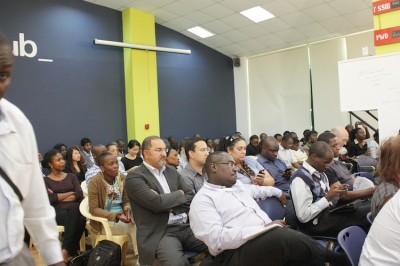
An event in session at the iHub.
General consensus by the panel was that there’s still a long way to go and more to be done to improve the start-up ecosystem in Kenya. In conversations with a few private equity fund managers over the last week, Andrea’s claims were supported; there is still very little potential within the sector for fund managers to grow their pipelines from tech startups.
Meanwhile, inMobi announced it was scaling down its international operations and closing down offices in Africa and Russia. These markets will now be served by their London office. This at a time when the numbers show mobile penetration as rising exponentially on the continent. In the face of declining ARPU there’s increasing demand for data across Africa and the globe but the growth of smartphones on the continent is still slow. One plus one should equal two. Rising mobile penetration plus increasing demand for data should mean (somewhere in there) that there’s huge potential in the short term for businesses providing content and services on mobile via the internet. In my opinion, the potential is probably bigger than any commentator can say. It’s my view that the problem is in the timing. Apparently, users on the continent are on their own clock and exhibiting online behavior that deviates sufficiently from the norm common in the west as to make it less attractive for businesses like inMobi to justify a physical presence here.
Within this hype-vs-reality quandary lies a question which, due to inadequate answers, is probably one of the biggest reasons tech startups on the continent struggle. What do users in the mass market do with their mobile phones and how do they do it? A study by iHub Research funded by infoDev takes a stab at this problem from a high level perspective providing entrepreneurs planning to launch products/services designed for the mass market with useful analysis.
Hype gives us all something to aspire to. Reality makes sure only products that score well on the utility vs hype ratio stay alive. It’s natural selection at its best. Until we find actionable insights on user behavior related to mobile telephony on the continent we may have little to show but hype. Without actionable insights only chance can produce apps/services people would pay for.
But what can be done to give tech startups in sub Sahara Africa a fighting chance in this difficult operating environment? I can think of three quick ways.
- Less hype more work. I am all for hackathons, pitchfests and all manner of contests that put young entrepreneurs in the lime light. I believe they are an important part of the ecosystem allowing stories to spread and giving young people something to aspire to. Let’s add to these events metrics that reward entrepreneurs who successfully bring to market their products otherwise the only story we tell is about people who build cool things. Let’s also take these events on the road to cities and towns other than Nairobi, Dar es Salaam, Kampala and Kigali.
- Teach shipping. We should find ways of teaching basic entrepreneurship in our institutions so that we help young business owners understand how to build teams and run businesses. That way they know what to look for in someone to run things for them. Most of all, more focus should be put on equipping start-ups with the skills to ship products. It’s pointless building a great app if all it ever does is get whipped out at the next challenge/competition/pitchfest. Get customers or close up shop. Those who end up in formal employment would benefit from these skills as they, by necessity, include focus, project management and strategy.
- Think business. What are we building? Who shall use it? How will we get paid for it? How will they obtain it? How will we support them? How much will it cost us to do this? How will we grow to break even? We need to spend less focus on grants and more focus on building sustainable enterprises that make more money than is spent running them. I am always surprised by the number of tech startup owners who can’t answer 5 out of 7 of the questions above.
- Learn from people. It is difficult to become an expert in a problem users face until you have met them and spoken to them. Building a solution to a problem implies that one understands it enough to be somewhat of an expert on it. Basic design thinking skills coupled with lean methodologies can provide young businesses with the agility they need to learn quickly and launch compelling solutions. Putting your product out in the wild and learning from user experiences and feedback is invaluable to a young business. Leave the attitude at home and go out the door where you can learn from other people.
The reality isn’t pretty. The mobile technology industry in East Africa, though still in its infancy, has come along way already. In this hyper-connected age, we just haven’t come far enough fast enough.
Delivering Value Made Simple
“The rationale behind how a business creates, delivers and captures value.”
That’s the short version definition for the term ‘business model‘. For those with no background in economics or commerce (read techies) all this talk about ‘value’ can be too vague to be much good. It leaves too much to subjective interpretation. It needs to be less so. Less subjective interpretation on the innovators end and about the same as before on the consumer end. For purposes of this post, techies include those who make things like handbags, solar panels, furniture…as well as computer programmers.
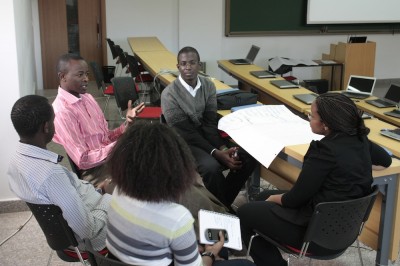
Participants at a Semacraft Design Thinking workshop.
Tech innovators typically need to ideate less from the comfort of their space (workshop/keyboard) and more from the environment their clients will be using their product or service. This means clients continue to judge the performance of the product using their existing schema and the innovator adopts their own interpretation of value to the users subjective interpretation.
So what does delivering value mean for a techpreneur in Africa? It boils down to job descriptions. What job is the client trying to get done and how does your new app/service/magic help them do it better, faster, cheaper and/or cooler? When clients choose to take the risk of investing money or time (or both) in trying your technology, they expect something to happen. Delivering on that expectation is your easiest definition of delivering value. It means innovators need to spend lots of time with the people they expect to serve with their technology in order to understand what this expectation would be.
But when is value actually delivered? Is it at point of sale? Is it at point of use? Is it at point of disposal? Is it at multiple areas? Social enterprises and civil society led projects generally tend to lose sight of this resulting in huge amounts of wasted resources and a muddied view of their sector in the public domain. For-profit organizations can be just as guilty of failing to understand their clients. Financial services businesses can be notorious for creating products that are poorly distributed or whose value is eroded at the point-of-use such as low density of ATMs resulting in long queues and high charges for clients wishing to close their accounts (point-of-disposal). Some products are essential enough and common enough to be almost impossible to differentiate at the product level. However, new value can be delivered through better distribution, better packaging, easier disposal or better branding that taps into the client’s aspirations.
So before you spend too much time building out some amazing new app, chair, bag or drone make the time to listen and watch your clients to understand what their lives are like and how your product can make a part of it better by helping them get a job done; or to put it in buzz words we all understand…
“Understand how your product or service empowers users across the value chain by synergistically delivering new value through innovative business models.”
or get more buzz words here 🙂
TweetInnovating for the People: How Africa is using Technology for Better Governance.
This post is the forth and last article in a four-part series on Africa: The Present Frontier.
On his first day in office, US President Barrack Obama signed the Memorandum on Transparency and Open Government start the process that led to the Data.gov we know today. Within 3 years, other governments had followed suit around the world with many attempting to do it and others getting past the hurdles to finally launch. The first one in Africa to start the process and deploy an open data portal was Kenya. Other countries are expected to follow suit in the coming months and years.

The Liberia Business Registry which provides an online platform for business registration. Image source: http://www.lbr.gov.lr/
The story of governance in Africa though punctuated by war, coups de etat and not-so-democratic elections is also full of stories of democratic progress and innovation. Technology is playing a role on the demand side of governance with citizens taking to technology platforms to amplify their opinions and demand better services from governments. It’s playing a big role on the supply side as well with governments adopting e-government and making progress along the path to open government and turning Africa into an attractive place to live in and do business.
The IFC in its Doing Business report for 2012 found that every single East African country had made at least one reform aimed at making them an attractive investment destination. Areas such as electronic submission of documents for businesses establishing a presence are important for governments in the East African Community. Sadly, despite the reforms, the 2012 Doing Business ranking show only 2 out of 5 of the EAC states improved their rankings with all the others dropping between 2 and 4 places from 2011. Rwanda remains the 3rd best country to do business on the continent after Mauritius and South Africa at its current 45th position in the rankings. Kenya, at 109, is ranked better than Nigeria, Brazil and India.
The improvements in the EAC have resulted in stronger legal institutions but maintained expensive regulatory processes. However, as these governments implement e-government initiatives and make progress along their respective roadmaps, the costs for businesses and individuals where interactions with government are concerned will reduce and play a role in improving the business environment in the region. This is key to creating employment, reducing poverty, improving the quality of life and growing a country’s GDP. Here are some examples of how countries in the region are using technology to serve citizens and protect the gains made in opening up the democratic space and improving the business environment.
- Kenya Revenue Authority’s (KRA) Portal. Interacting the revenue authority almost always meant a great deal of standing in line and loss of valuable man-hours lost. This created an environment for intermediaries and corruption to thrive resulting in the loss of millions of dollars in revenue every year. The authority implemented a series of measures to make customs, excise and value-added-tax processes convenient, less costly and more water tight through an online platform resulting in a level playing field for business and less citizens standing in line for days to get things done. It also put those pesky ‘brokers’ hanging around government offices offering to ‘help’ out of business.
- Tanzania Revenue Authority e-Filing and mPayments. In a move that created a new precedent in Government to Citizen (G2C) services in sub-Sahara Africa, the Tanzania tax authority implemented a mobile payments tax system which makes it unnecessary for citizens to visit their offices to pay taxes.
- Rwanda Mobile-enabled Driving license applications. In an effort to reduce the amount of time it takes to apply for a driving license in Rwanda, the government introduced a mobile-enabled service that allows citizens to send a text message to the platform and receive a registration number, the first step in the process, cutting the process from 4 months to 45 days.
- Liberia’s Online Company Registry. Liberia’s company registry allows citizens to register a business without having to make trips to government offices usually a standard practice with this bureacractic process.
While some have already done so, a number of countries in sub-Sahara Africa are on the path to introducing electronic lands registries, integrated financial management systems and electronic business registration in an effort to improve service delivery in their government to government (G2G) interactions and G2C / G2B services.
The old Africa is almost no more. There’s a new Africa emerging. One where stronger institutions exist, better legislation, transparency and citizen participation in governance is the norm. The new Africa is here.
The Innovation EcoSystem in East Africa
This post is the third in a four-part series on Africa: The Present Frontier
“Many investors see East Africa’s strong growth potential as a driver of better investment performance than in South Africa: This is a huge shift in private equity attitudes toward Africa, which have been historically focused on South Africa. East African investment potential is seen as roughly on par with West Africa, where similar growth dynamics are at play.”
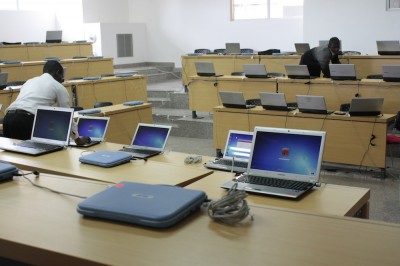
A computer lab at Strathmore University, Nairobi, Kenya.
Attitudes are changing. New ideas are emerging from a continent few technology investors took seriously only a few years ago. The ideas that have modified the world’s attitudes about investing in Africa have been ignited by four elements of the innovation ecosystem which have come to life and began to flourish. Like a mother giving birth, every element first ‘popped’ and then began to grow as the continent writhed in pain. The pain of implementing new infrastructure, enforcing better governance, creating new policy and regulating new services like mobile telecommunications and mobile money that have catalyzed the rise of tech innovation on the continent.
Four elements within the innovation ecosystem are playing a big role in changing Africa’s profile on the tech scene. However, they are all areas that still require great deals of investment, representing in themselves opportunities for anyone astute enough to see ways in which they can be exploited.
- Education is a big part of the ICT innovation ecosystem. The quantity and quality of ICT programs offered by educational insistitutions and other organizations can have an impact on the quantity and quality of tech innovations coming to the surface. The ICT education sector in Africa has evolved from offering plain computer science programs to multidisciplinary ICT programs like Bachelors in Business IT and Masters programs in ICT Policy & Regulation. However, there is a need to diffuse this education beyond first tier cities by creating the right business and regulatory environment to encourage the growth of training centres in rural towns.
- Mentoring & incubators. Educated young people with great ideas need the right environment and mentorship to work on their idea and prototype it. Hubs & incubators are helping to do that. iHub, mLab East Africa, ccHub, Bongohive, HiveColab and others across the continent are making it possible for tech innovators to find a physical space in which they can build their ideas out in good company and find mentors to help them make the leap from idea to viable profitable businesses. These organizations are also providing valuable linkages between entrepreneurs and potential investors. There are currently 53 hubs and incubators on the continent with the vast majority in sub-Sahara Africa according to this crowd-sourced data. There’s room to set up more of these in East Africa, especially outside the capital cities.
- Funding these ideas to launch or to scale is a big challenge for both venture capital funds and entrepreneurs. Many tech startups do not always have the business processes or track record investors are used to and entrepreneurs usually don’t know what investors are looking for in a business. We need to go beyond the traditional approaches to investing in tech startups and explore other mechanisms to provide them with the headstart they need. In Kenya, the Kenya ICT Board awards $50,000 under its Tandaa grant program helping businesses with good ideas access capital they would otherwise not obtain & The World Bank has also committed $55million to help innovators in Kenya bring their ideas to market. In spite of the challenges, East Africa and Kenya in particular has experienced an upsurge in investor activity with Deloitte’s private equity survey report for 2012 describing the outlook as promising. 16 new funds dedicated to the region launched in 2011 alone, a sign that the private sector is willing to do its part in funding good businesses that rise to the surface. Some of the funds that have been active in the region are early stage venture funds like EVA fund and 88mph which are making it possible for startups to access seed capital for commercially viable ideas.
- Showcase events provide easy-to-access platforms that allow startups to show off great ideas to investors and potential partners. They are a useful part of any ecosystem. In the US, DEMO has worked well helping bring ideas to the attention of investors. Ideas like Salesforce.com, VMWare and Adobe Acrobat benefited from the platform DEMO provides entrepreneurs. These events not only put people with ideas infront of people with money, they also generate press and content about these businesses that many of them could never afford to do on their own. In East Africa, PivotEast provides 25 techpreneurs with an opportunity to pitch their ideas before a room full of investors. This year, PivotEast is happening on the 5th and 6th of June at the Ole Sereni hotel in Nairobi. Later this year, DEMO in conjunction with the USAID, Microsoft, Nokia and other partners are launching an international event in Africa. DEMO Africa‘s inaugral event will be held in Nairobi on October 21 & 22.
Education, mentoring, financing and showcases. These four elements are in place, functioning and growing. They are contributing to the rise of tech innovation on the continent and making it easier than ever for investors to find teams with great ideas in which to invest. This is the last virgin tech landscape left on the planet. The best time to become a player in the African technology innovation ecosystem is now.
Four Things to Consider When Designing Small Solar Systems for Africa
If you are preparing to launch a solar lighting product in sub-Sahara Africa, especially Kenya, here are four things to consider based on my observations in Eastern Kenya earlier this year. No citations here, no scientific data just my thoughts.
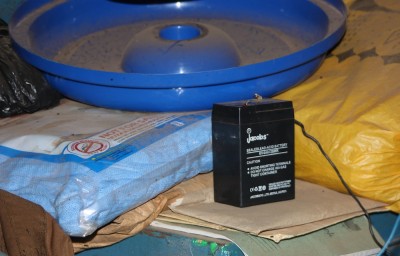
Spotted in rural Meru, Kenya. Small battery that was part of a lighting hack.
- Tradeoffs will happen. Be on the right end of the tradeoff when it does. Usually these tradeoffs are not just price versus features but new thingymajigy vs status quo. Despite the trouble with kerosene, most consumers know how to cope with it. Save the customer time or money and you will be on the better side of the tradeoff. Time in getting a job done or money that is spent as a consequence of the existing solution (medical bills for children studying by kerosene lamps, burns, continued purchase of kerosene etc). If the payoff from your solar solution appears to require a long wait, you may already be on the wrong end of the tradeoff. Find a different benefit to present.
- Aspirations exist. Customers purchasing their first solar lighting product are moving up from kerosene to something cheaper to run. However, once they light up their house they begin to plan for the next electricity consuming device. A bigger radio and a television rank fairly high on the list of these customers. If your product can scale up with them to a point on that journey, they won’t feel they will have to write it off when they are ready for something bigger. Panels that form an array, charge controllers that can be replaced with bigger ones, the option to add batteries…these are some of the ways you can plugin to the customer’s aspirations and grow with them. A point to note; solar home system users in off-grid locations consider a grid connection once it becomes available despite the obvious cost benefit of solar power. A grid connection is considered a step up.
- Price isn’t everything. People like to show off their latest acquisitions, especially when these acquisitions translate into improved perceptions of their social status by their own peers. If your product is known for being cheap, that erodes the ‘brag-abilty‘ of it. Nokia mobile phones were very popular in the slums of Kibera despite not being the cheapest.
- Be part of an ecosystem. While showing off a solar product to residents of rural towns in Kenya earlier this year, they repeatedly asked what they would do with it if it needed repair. Because it features an LED light with integrated power storage, they immediately began asking how it would work with regular solar bulbs or readily available alternatives. They complained the panel was too small (they hesitated to classify it as a solar solution) and it worked with nothing else they that is readily available at their local electronics stores. Any one of those issues was a deal breaker. Play nice with others in the ecosystem and that includes other LED lights, batteries and fundis (local skilled technicians).
It seems to me that any firm selling a 5w-10w panel + 12v 60AH (or more) battery + easily available bulb is on the right path. Now if the solution allows additional panels to be integrated, a charge controller added and bigger batteries plugged in, you have a winner.
